| Donations |
|
Advocacy Alert |
The time has come to rally for the Promising Pathway Act! Click for details and to easily send letters. |
Latest News
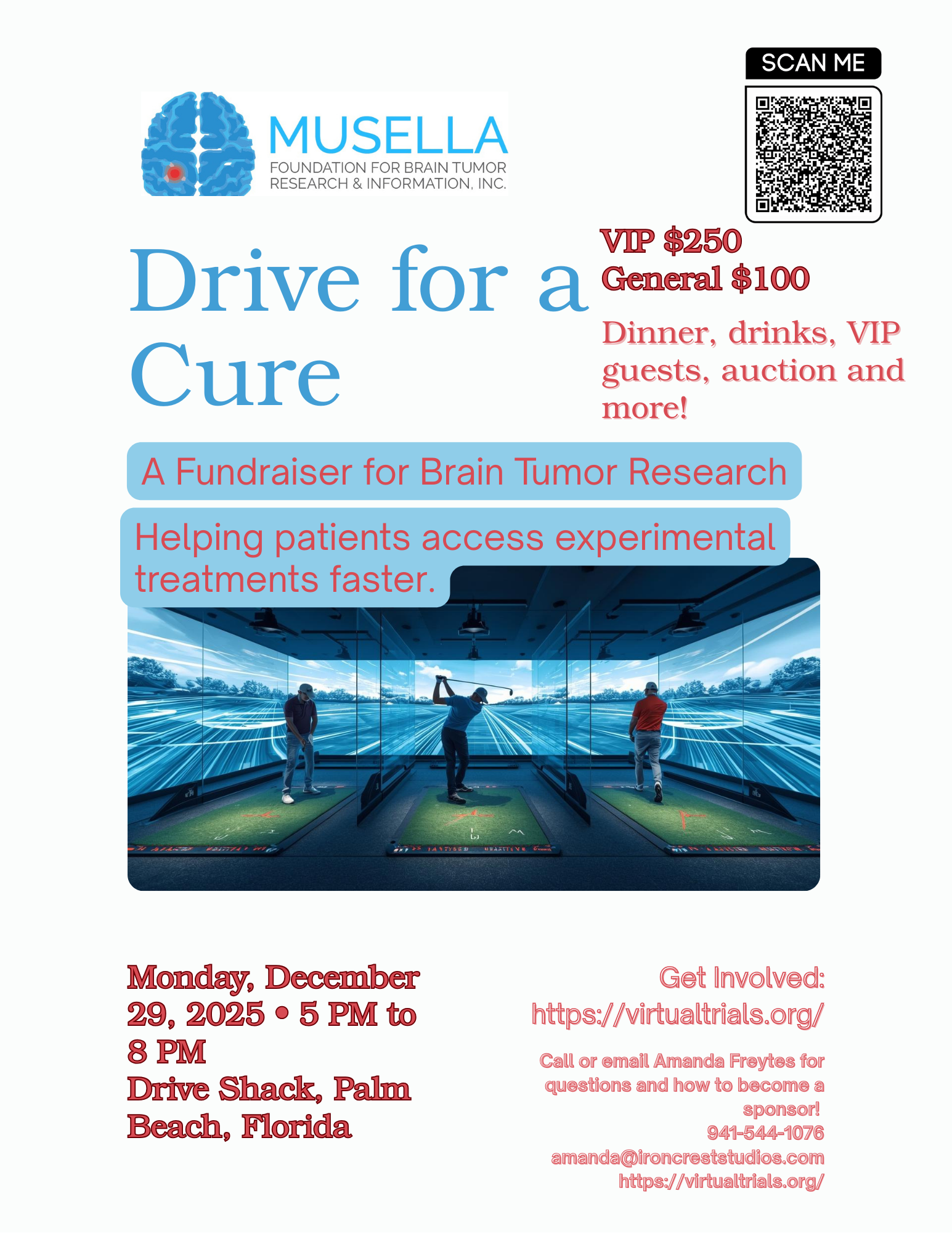
- "Drive for a Cure" Fundraiser Event in South Florida
We are having a fundraiser event at Drive Shack in West Palm Beach, Florida on December 29th!
Click HERE for details!
- Attenuation of malignant phenotype of glioblastoma following a short course of the pro-oxidant combination of Resveratrol and Copper
This was a very small early study done in India. They explored whether a combination of the supplements resveratrol and copper might affect glioblastoma biology. Ten patients received the supplements orally four times a day for roughly 11 days prior to resection surgery, and their tumor tissue was compared to samples from ten patients who did not. The treated tumors showed differences in several biomarkers linked to tumor aggressiveness, suggesting a possible biological effect on the tumor environment.
While these findings are interesting, there are important caveats. This was a small, short-term study that looked only at tumor tissue changes, not whether patients lived longer or felt better. Further research is needed to determine whether prolonged treatment with this combination can improve patient outcomes.
- Imaging Biometrics and GE HealthCare expand agreement
GE Healthcare, one of the largest MRI manufacturers in the US, is partnering with Imaging Biometrics (IB) to distribute advanced imaging software that can help doctors better distinguish brain tumor progression from treatment effects with "Fractional Tumor Burden" maps. This is encouraging news for the brain cancer community. We hope to see more widespread adoption of these tools that make it easier to monitor brain tumors and understand how they are responding to treatments. For a great webinar on Fractional Tumor Burden maps, click here.
- Adaptive radiation therapy for glioblastoma: clinical efficacy and recurrence patterns
This new study from Japan provides further evidence in favor of adaptive radiation therapy (ART) for glioblastoma (GBM). The ART approach adjusts the radiation plan during treatment based on changes in the tumor or surgical cavity. In 59 GBM patients, ART was safe and showed promising outcomes: median overall survival was about 27 months, progression-free survival about 10 months, and serious radiation side effects were rare. While research on ART in brain cancer is still developing, it does provide hope that smarter, adaptable radiation plans could help patients live longer with fewer side effects.
Brain Tumor Co-Payment Assistance Program StatusCLOSED to new and renewal applicants |
| Sponsored By |

|
| Please Click On The Above Banner For More Details |
To submit a story/press release go to: click here To unsubscribe, click here.
The article commentaries are the opinions of Al Musella, DPM and do not represent the official position of the Musella Foundation. Copyright 1992-2025 Musella Foundation - All rights reserved. No part of the Brain Tumor News Blast can be reproduced without the express written permission of the Musella Foundation.