Sponsored by

Last updated 7/26/26
Reprinted with permission from the patient and the original authors. Adapted from the March 2015 Daily Mail / Associated Press report, with updates from Sandra’s 2023 interview with the Cancer History Project.
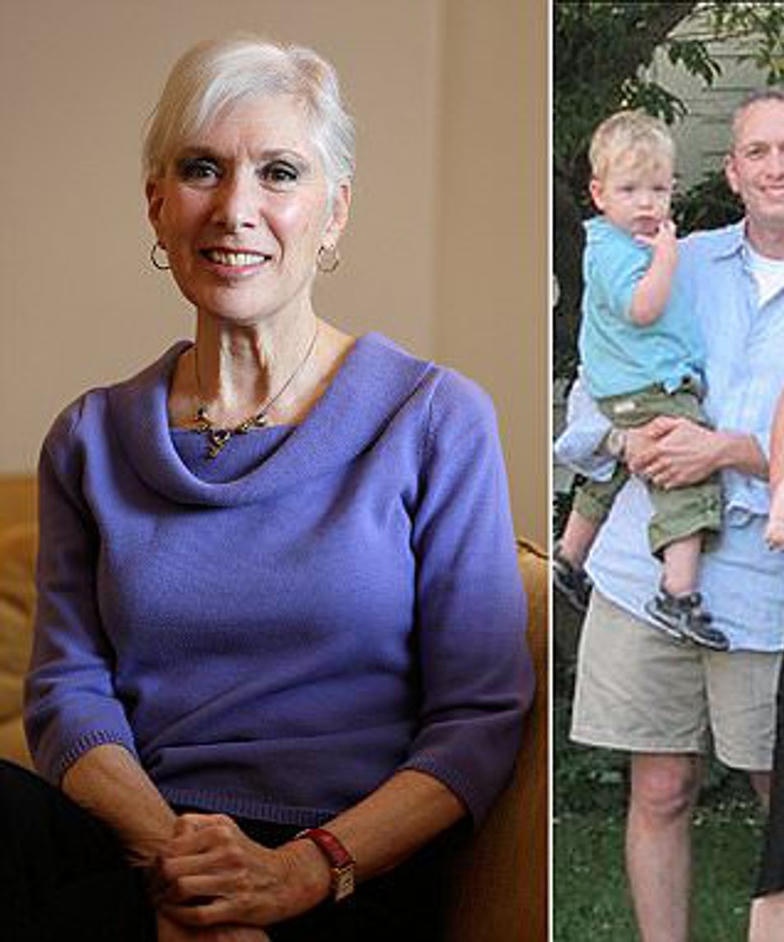
Sandra Hillburn of Fort Lee, New Jersey — diagnosed with stage 4 glioblastoma in April 2006 and given only 2–3 months to live.
When Sandra Hillburn was diagnosed with terminal brain cancer in 2006, she was told she only had up to three months to live.
Twenty years later she is still going strong — walking miles every day, playing golf, seeing her grandchildren, and continuing monthly visits to Duke — thanks to an experimental treatment that combined a dendritic-cell vaccine targeting cytomegalovirus (CMV) with a tetanus booster.
Hillburn, of Fort Lee, New Jersey, was one of 12 cancer patients in a groundbreaking study conducted at the Duke University Medical Center’s Preston Robert Tisch Brain Tumor Center.
Researchers found that a dose of tetanus vaccine helped patients like Hillburn live years longer when added to the experimental immunotherapy for the most common and deadly kind of brain tumor — glioblastoma.
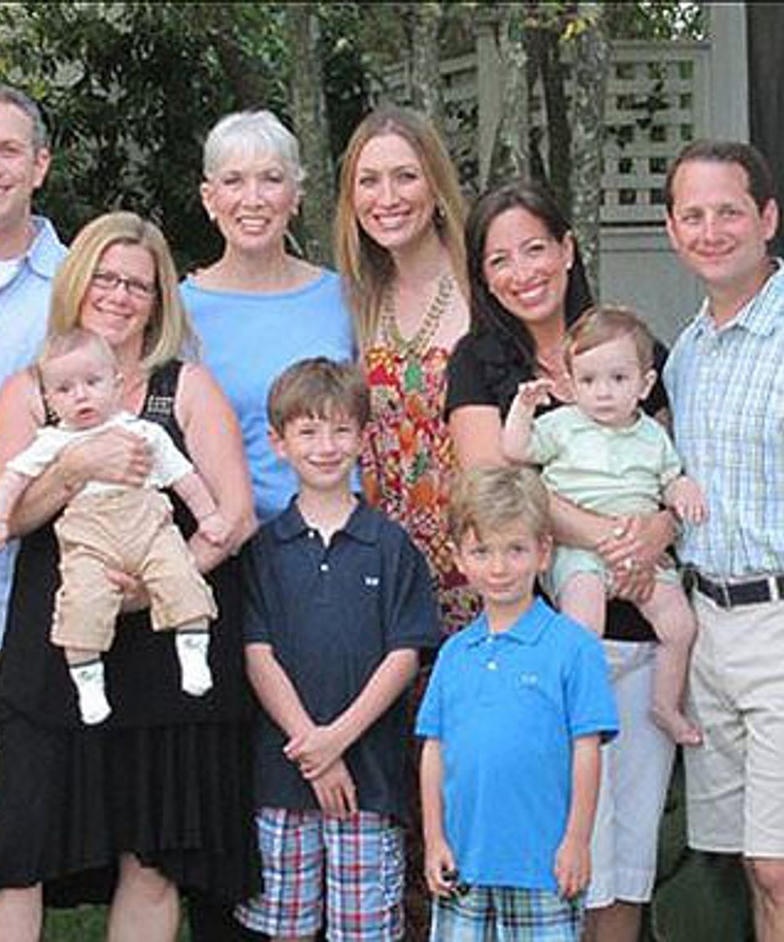
Matriarch: Thanks to the experimental treatment, Hillburn (top center in earlier photos) got to witness the birth of five more grandchildren and continue watching them grow.
It “put the immune system on high alert,” paving the way for the experimental treatment to work better in attacking the disease, said researcher Kristen Batich of the Duke University Medical Center.
In a paper published in the journal Nature in 2015, she and others described the study of 12 patients. Those who received the tetanus shot lived years longer than those who did not.
Dr. John Sampson of Duke, senior author of the report, called the results promising but noted the study was small. Larger studies were planned.
Brain cancer experts unconnected with the work were impressed. The results are “very exciting,” said Dr. Nader Sanai of the Barrow Neurological Institute in Phoenix.
When diagnosed in New York in April 2006, “I was told I had two to three months to live,” Sandra Hillburn recalled.
Her left side had become paralyzed. Colleagues were praying for her. A CAT scan revealed a brain mass. She was admitted on an emergency basis and given the grim prognosis of surgery, chemotherapy, radiation, and then palliative care.
Her family flew her to Duke in North Carolina because of its reputation for glioblastoma care. Neurosurgeon Allan Friedman performed the surgery. The original plan to implant a shunt for monoclonal antibodies could not be completed because of the structure of her brain, but the tumor removal was a success. She felt better almost immediately.
She was then offered a place in the experimental vaccine trial led by Dr. John Sampson.
“I was very positive it would help,” Hillburn said. “I said, ‘Sure, thank you.’ I’m still saying thank you.”
Doctors removed white blood cells from the patient and equipped them with a chemical target found in the tumor — cytomegalovirus (CMV), which is present in more than 90% of glioblastoma samples but not in surrounding healthy brain tissue. The treated dendritic cells were then reinjected into the patient’s body, where they trained the immune system to go after the remaining cancer cells.
All patients in the study received standard surgery, radiation, and chemotherapy (Temodar), plus an ordinary tetanus-diphtheria shot, followed by three injections of their own engineered cells spaced two weeks apart.
They were then randomly divided: one group received a second, tiny dose of the tetanus-diphtheria vaccine at the injection site the day before the next cell infusion; the other group received a placebo. The tetanus mini-shot was designed to “rev up” the immune system in that area so the body would be more responsive to the vaccine cells.
Hillburn continues to receive the vaccine periodically at Duke. She has said she knows it is still working: during COVID restrictions when she could not travel for a year, lymph nodes near her groin began to ache — the same feeling she had when she had cancer. After she received the vaccine again, the aching stopped.
“I know it’s the vaccine… And I know that it’s given me a good quality of life.”
In the years since her diagnosis she has attended her son’s wedding, gained more grandchildren, and continues to walk steep hills, play golf (she jokes that Temodar actually improved her game by slowing her down), and live independently.
Every weekend for more than 16 years, Dr. Henry Friedman has called her personally to check on how she is doing.
“He calls me every single weekend… I even said to him at one point, ‘Henry, how about I’ll call you if I’m not doing well?’ He goes, ‘Will it be okay if I still call you?’ Oh, my goodness. Yes. I look forward to speaking to him.”
Hillburn credits the treatment, the outstanding care at Duke (especially the research nurses), her strong family support, and the example of her father, a long-term survivor of two cancers who simply “went about his life.”
“I just looked at it like my new job,” she said of traveling to Duke for treatments. “I had always worked, so I just looked at it like that.”
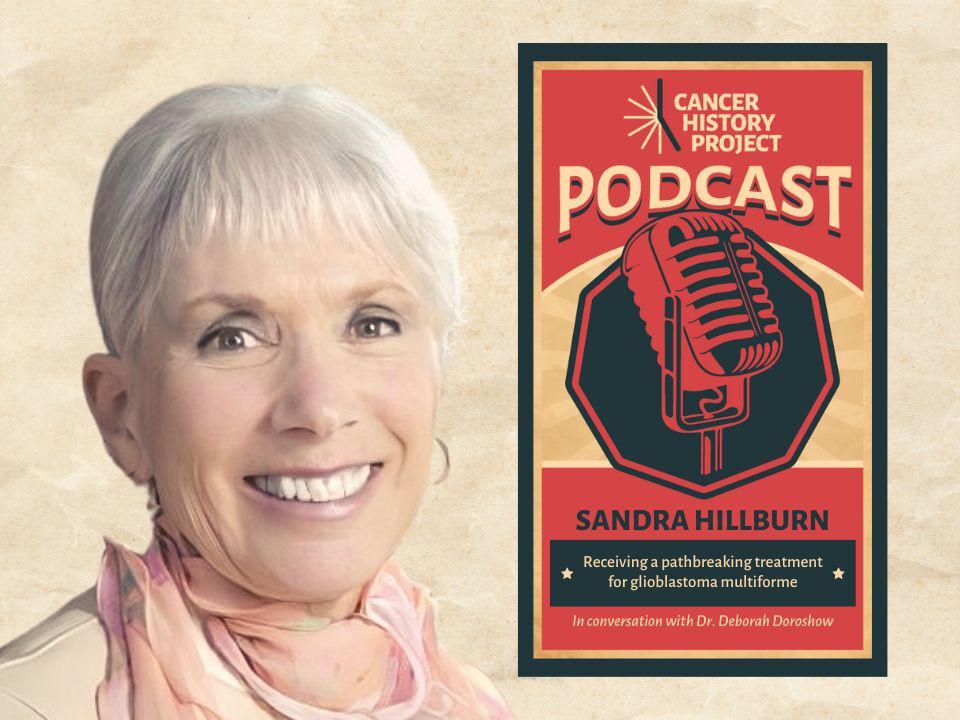
Sandra Hillburn shared her full story in a 2023 Cancer History Project podcast interview with oncologist-historian Deborah Doroshow.
At the time of the original 2015 report she was already nine years past a two-to-three-month prognosis and said she thought she was “good for at least another 10 years.” She has far exceeded that.
Today she continues to live a full, active life and remains a powerful example of what is possible when patients have access to innovative clinical trials, exceptional medical teams, and the determination to keep going.
Source notes: Original 2015 reporting by Associated Press and Snejana Farberov for Daily Mail. Additional details from Sandra Hillburn’s 2023 interview with the Cancer History Project / Cancer Letter. Reprinted and adapted with permission of the patient for educational purposes on virtualtrials.org.
For the latest information on glioblastoma clinical trials and treatments, visit the Musella Foundation’s Virtual Trials database.