Sponsored by

This post hoc analysis looked at the effect of temozolomide (TMZ) timing on glioblastoma outcomes using data from two past clinical trials: the CENTRIC trial (for MGMT methylated patients) and the CORE trial (for MGMT unmethylated patients). Due to EU patient data regulations, only patients from the studies who were deceased at the time of database closure (April 1, 2024) were included in the analysis (i.e., 72% of patients from CENTRIC and 75% of patients from CORE). In CENTRIC, median overall survival (mOS) was 20.6 months for morning TMZ versus 21.1 months for evening TMZ. In CORE, mOS was 10.9 months for morning TMZ versus 11.4 months for evening TMZ. These differences were not statistically significant. However, morning TMZ administration was associated with higher bone marrow toxicity in both trials. Although this analysis found no survival benefit based on TMZ timing, these results should only be considered exploratory, and not definitive, due to the study limitations.
This study analyzed data from a French national network database to compare two different chemotherapy regimens (procarbazine-CCNU-vincristine [PCV] versus temozolomide [TMZ]) in patients with newly diagnosed IDH-mutant 1p/19q-codeleted grade 3 oligodendroglioma. The results showed patients who received first-line PCV with radiation therapy lived longer than those who received TMZ with radiation therapy. After 5 years, 89% of patients treated with PCV were still alive, compared to 75% of those treated with TMZ. At 10 years, the survival rate was 72% for PCV and 60% for TMZ. While TMZ is generally easier for patients to tolerate, these results suggest it may not be as effective as PCV in this particular cohort.
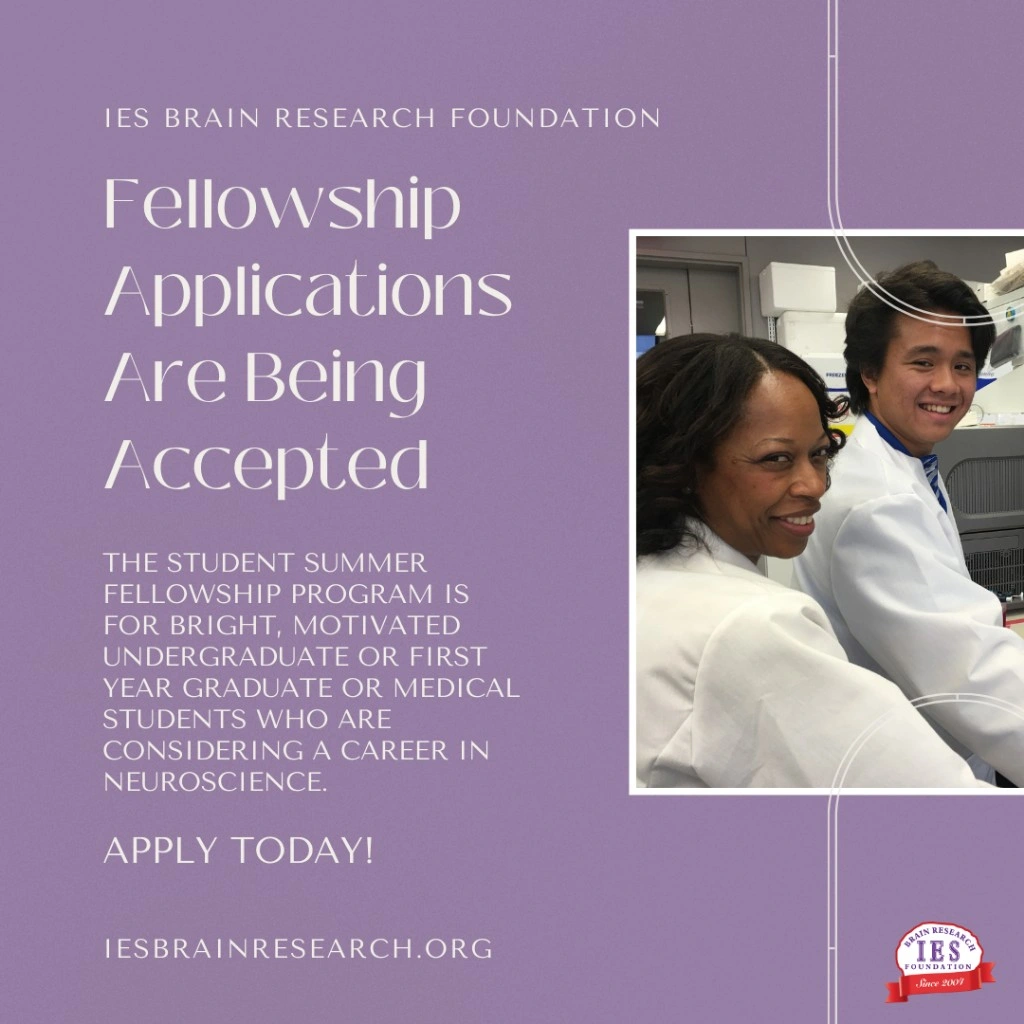
The Irene & Eric Simon Brain Research Foundation is now accepting applications from undergraduates, first year graduates and medical students for Summer Fellowships in neuroscience. For applications and instructions, click the picture below:
We summarized an abstract on this study in our SNO 2024 Highlights (see CTIM-28), but the full publication is now available. The study investigated giving pembrolizumab (an anti-PD1 drug) before surgery to recurrent GBM patients, followed by continued pembrolizumab after surgery. The results showed this approach led to changes in the tumor's immune environment, including increased T-cell activity and interferon-related gene expression. However, despite the encouraging molecular changes, this treatment did not demonstrate a significant survival benefit. Future research should explore combining this approach with additional complementary therapies.
We are proud to announce the following research grants:
1. $18,800 grant to Cypris Therapeutics to fund the project: Synergistic Co-therapy of Cholesterol
2. $55,000 grant to Dr. Eric Wong at Rhode Island Hospital to fund the project: Optimization of Computer Modeling of Tumor Treating Fields for Clinical Applications: Incorporation of Perfusion Studies
To view all of our research grants, click HERE.
Our December webinar with Dr. Michael Schulder on sonodynamic therapy using focused ultrasound for glioma is now available on the Musella Foundation website: click HERE. This is one of our favorite treatments in the pipeline, and the webinar is worth a watch!
The Society for Neuro-Oncology annual meeting is the biggest event of the year for brain cancer research. Here are some of the most important highlights from the research presented at this year's SNO 2024 meeting.
As we close out the year, we're proud to share our Musella Foundation 2024 Highlights. Everything we do —funding research, expanding patient navigation services, providing vital educational resources, patient advocacy— can only be done with your support. Please consider making a year-end donation to help us continue driving progress, supporting patients and families, and bringing hope to the brain tumor community. Every dollar helps!
Under our current system, there is a 4.7 year gap between when a medical device gets FDA approval and when it gets coverage by Medicare. This proposed bill would close this "Valley of Death" lag for Medicare beneficiaries. If enacted, this bipartisan legislation will help ensure that American seniors are granted faster access to innovative medical devices and diagnostics. For brain cancer patients, there are at least 3 medical devices in development that may be eligible for this once approved by the FDA. We do not have 4 extra years to wait for Medicare to allow us access to these treatments! To advocate in favor of this bill, please click here!
The Musella Foundation helped fund this research looking at how different treatment options affect length of survival for children with DIPG. Children with DIPG who did not receive any treatment had a median survival of just 3 months. Children who had only radiation lived for a median of 10.4 months from diagnosis. Those treated with both radiation and chemotherapy had a median survival of 11.7 months. These numbers are horrific and show that new treatments are urgently and desperately needed. If the Promising Pathway Act was passed, we would have better treatments right now.
Mark your calendars for December 18 at 7pm EST! We'll be hosting a webinar with Dr. Michael Schulder on sonodynamic therapy for high-grade gliomas.
The Musella Foundation attended the Society for Neuro-Oncology (SNO) Annual Meeting this past week. We're working on a comprehensive summary of highlights which will be shared soon, but in the meantime, we wanted to call attention to an important abstract on a Phase 1 trial of 12 newly diagnosed glioblastoma patients treated with a personalized neoantigen vaccine alongside the standard of care, including tumor treating fields. The results are remarkable: 100% progression-free survival at six months, 67% 2-year survival, and 58% 3-year survival. However, one patient experienced serious adverse events which ultimately led to brain demyelination and death. We really hope to see continuation and expansion of this research, not only for the exciting survival results, but also to gain a better understanding of this potential safety concern for personalized neoantigen vaccines (i.e., unintended T-cell cross-reactivity, potentially contributing to brain demyelination in one patient).
Alpheus Medical has announced exciting results from their Phase 1/2 sonodynamic therapy (SDT) trial in recurrent or refractory high-grade glioma. The results were also presented at the SNO conference by Dr. Michael Schulder.
The trial combined low-intensity diffuse ultrasound with oral 5-aminolevulinic acid (5-ALA) in 12 patients across three cohorts, with escalating treatment durations. The treatments were delivered monthly for a minimum of four sessions, and a treatment duration of 120 minutes was established after dose escalation.
Results showed significantly extended median overall survival (OS) to 15.7 months and progression-free survival (PFS) to 5.5 months, compared to historical data of approximately 6-8 months and 1.8 months, respectively. This is particularly impressive given that two patients were enrolled after multiple recurrences and seven patients had multifocal or multicentric disease.
Alpheus plans to start a randomized, controlled trial at multiple centers across the U.S. in 2025. We did a webinar with Alpheus in early 2023, and we hope to host another updated one soon!
Orbus Therapeutics has now shared results from their global Phase 3 STELLAR trial, which tested a combination of eflornithine and lomustine in patients with recurrent anaplastic astrocytoma. Eflornithine is a drug that slows tumor growth by blocking ornithine decarboxylase, an enzyme that helps cancer cells grow and divide.
The primary efficacy endpoint for the study, overall survival in the intent-to-treat population of 343 patients, did not achieve statistical significance. However, the company noted promising and clinically meaningful improvement for a subset of 194 patients in the study who had recurrent grade 3 IDH mutant astrocytoma. In this subset, patients receiving the combination therapy had a median OS of 34.9 months, compared to 23.5 months with lomustine alone. Median PFS was 15.8 months versus 7.2 months with lomustine alone. The treatment was generally well-tolerated although, consistent with prior eflornithine studies, there were some Grade 3+ adverse events related to myelosuppression and hearing impairment.
Congratulations to our President, Al Musella, for joining the board of IQ-AI! The Musella Foundation has been helping Imaging Biometrics, a subsidiary of IQ-AI, fund and run an expanded access program for their glioblastoma drug candidate, oral gallium maltolate. Additionally, we are starting a new project using Imaging Biometrics' unique software, which creates Fractional Tumor Burden Maps from MRI scan data, to help monitor glioblastoma patients starting Optune so we can tell earlier if Optune is working for that patient or not!
The Musella Foundation Copayment Assistance program is now open to new patients as well as those seeking renewals of their grants. The program helps patients with high grade brain tumors pay for Temodar, Optune, Avastin, and Gleostine (and their generics). For details and to apply, visit braintumorcopays.org.
UNC Lineberger is the third treatment center to complete site activation for the Oral Gallium Maltolate Expanded Access Program! The program is also currently available at Providence Mission Viejo (California) with Dr. Santosh Kesari and at Northwell Health (New York) with Dr. John Boockvar. If you are interested in accessing this program but do not live near one of the 3 open centers, you can ask your doctor to contact eap@imagingbiometrics.com for information on how to join the program.
These are Al Musella's personal thoughts on what he would do if diagnosed with a Glioblastoma. The document is updated periodically, and this latest update was completed on 10/24/24.
In their quarterly financial report, Novocure announced that the FDA granted Breakthrough Device designation for the use of Tumor Treating Fields therapy for brain metastases from non-small cell lung cancer. The Breakthrough Device designation is a special status granted to innovative medical devices that have the potential to more effectively treat life-threatening or irreversibly debilitating conditions and allows for expedited development and review process so these devices can potentially reach patients faster.
NuvOx Pharma is a company developing a new drug called NanO2. They have a currently recruiting Phase 2b trial called RESTORE, which is testing NanO2 together with standard of care for newly diagnosed glioblastoma. NanO2 was developed based on technology similar to ultrasound contrast agents, but modified to carry and deliver oxygen. The drug is meant to reverse tumor hypoxia, a condition that hinders the effectiveness of radiation and chemotherapy. The study investigators recently published two new journal articles, one to explain how NanO2 works and the other to describe the design and rationale for the Phase 2b clinical trial.